


EFIS Extenders and Accessories I/O Extender Downloads:

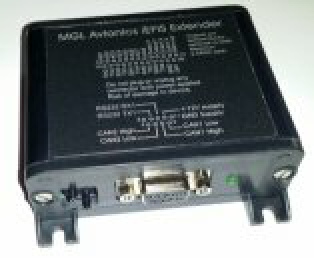
This device connects to the
airtalk link of an Enigma, Odyssey or Voyager EFIS system. This allows you
to extend the EFIS with comprehensive digital and anlog signal monitoring
as well as driving automation and alarm annunciator panels. The I/O
Extender is also used to allow remote control of certain EFIS functions
via joystick mounted push buttons etc.
EnigmaIOEX.exe
This program is used to create
and edit script files for use with the I/O Extender. Script files are used
to specify functionality for inputs and outputs as required for your
application.
IOEX.pdf
This is the user manual for the I/O
Extender. The manual describes installation and use of the I/O
Extender.
![]() |
|
|
USB COM Extender This device extends the number of RS232 serial ports for Enigma,
Voyager and Odyssey EFIS systems to a total of six ports (two are
available on the EFIS). The COM Extender is simply connected to one of the USB host ports of
the EFIS system using a standard USB printer cable (included or use your
own), no further setup is required other than assigning functions to the
varous ports from within your EFIS setup. |
|
Click on above three images for larger versions
|
The MGL Avionics Autopilot servo The MGL Servo is a stepper motor based system providing a
torque of up to 4.8Nm (with shaft rotating). The MGL Servo can be used with the Enigma, Voyager and Odyssey EFIS systems. This servo will also be supported by the XTreme EFIS autopilot function. For the XTreme, Voyager and Odyssey EFIS systems, this servo is controlled through the built in CAN interface and no COM Extender module is required. For the Enigma, this servo is controlled through a RS232 serial port, either the built in RS232 port 1 or Port 4 on the COM extender. Only a single port is required to control multiple servos. Servo user and installation manual Servo protocol manual for third party application use Please note: Odyssey, Voyager and Enigma also support Trio Avionics Gold standard servos via a COM Extender module. The Trio servo is a DC motor based servo using an electric clutch and effectively has zero residual torque when not engaged. This may be of advantage in certain applications. For an overview of available servo choices for MGL EFIS systems, please visit the following link:
MGL Servo optional accessories: We have a kit available containing required parts to construct a servo linkage using reft and right hand thread rod end bearings (shown on picture left). Converting the servo to a capstan servo is simple using the optional capstan conversion kit that includes all required parts. Please note: the capstan kit uses flexible steel cable around a drum. This cable should have a diameter of approximately 1.5mm. This cable is not included in the kit and must be supplied by the installer depending on required length. This cable is typically fixed to the actual, larger diameter control cable using clamping blocks. These clamping blocks are supplied. Minor alteratrion of these block may be required to suit actual control cable diameter. | ||||||||||
![]() |
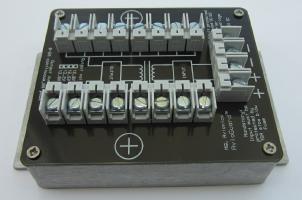
AvioGuard Isolated DC/DC converter for avionics applications. Wide input range (9-36V) solution provides clean 13.8V DC for quality power supply to sensitive avionics in the cockpit. High levels of fault protection and complete galvanic input to output isolation plus simple avionics battery backup solutions complete this useful device. | ||||||||||
![]() ![]() |
Magnetic field DC current measurement sensor This sensor can be used to measure DC currents in aircraft power systems in a wide range from less than 4A to as high as 120A depending on installation and configuration. The sensor connects to an EFIS system via spare RDAC inputs. Inputs CHT1,CHT2,OIl pressure or Oil temerature can be used and these can also be used on a second RDAC unit (consider a low cost RDAC VD as second RDAC if required). G1 and G2 EFIS systems can support up to 4 of these sensors while Enigma can support 2. These sensors can measure currents bi-directional, for example battery charge/discharge. The major advantage of these sensors is that they can be fitted to existing conductors very easily without a need to break the conductor or require the use current shunts. | ||||||||||
| Magnetic field current monitor manual - installation and EFIS configuration | |||||||||||